
An enterprise product with a self-serve story
Mobilize makes software that organizations use to run their communities, from a trade association’s members to a company’s alumni. When we started, it was priced and marketed like a low-cost, self-serve tool. Leadership wanted to sell to larger organizations, and that meant a new story, a new website, and a pipeline of enterprise accounts that didn’t exist yet.
The website showed the gap. It was built around features, with generic copy, broken SEO, and no clear path to a demo.
Starting with what their best customers said
We began with Mobilize’s best customers. We went through customer interviews, recorded sales calls, and support tickets, and pulled out the problems those customers described and the words they used for them.
That research became the content map for all 18 months. Working with the Mobilize team, we turned it into the big idea behind the new story: 10x Member Engagement. It moved the conversation from product features to the bigger shift associations were facing. A companion theme put that shift bluntly, How Associations Will Thrive or Die, and became an executive webinar series.
Choosing which organizations to go after
Next we sized the market and scored the accounts in it, so the team could focus on larger organizations that could pay enterprise prices. We built target account lists with clean data the sales team could use.
Trade associations were the main target, with non-profits and corporate alumni programs behind them. Each group got its own messaging. The work also gave sales baseline numbers to measure against and a clear list for outbound.
Rebuilding the website and the sales systems
We rebuilt the website on Webflow around the new story. It gave enterprise buyers educational resources to learn from, ways to sign up throughout the site, and a clear path to a demo.
Then we mapped how leads moved from marketing to sales, to see what the sales team needed to carry deals through a long enterprise cycle. Their Salesforce setup was broken, so we fixed it and connected it to HubSpot so leads could pass cleanly between the two.
We also tracked the marketing each target account saw, including ads, emails, and website visits. Sales could see which accounts, and which champions inside them, were already hearing from Mobilize. Leadership got live Databox dashboards of pipeline and marketing and sales activity, which they could open from a link on their phones.
Getting trade publications to carry the idea
The 10x Member Engagement e-book anchored the inbound campaign. We gated it on the website, then went a step further. We pitched it to trade journals and association publications as thought leadership, and they shared it with their readers as editorial content. That carried the idea to association leaders through publications in their own field. We also ran campaigns in those same trade journals.
We turned the same message into LinkedIn ads aimed at the target account list and used a testing tool to find which versions drove the most downloads, then ran retargeting to keep Mobilize in front of those accounts. Where the tracking could follow a click, we tied the ad spend to the deals it led to.
The same idea ran through the rest of the campaign creative, including ads built on customer stories and the Thrive or Die webinar series, which we promoted through both paid and organic channels.
Campaign creative
01 / 04
A LinkedIn ad for Mobilize’s community analytics, one of the versions we tested with target accounts.

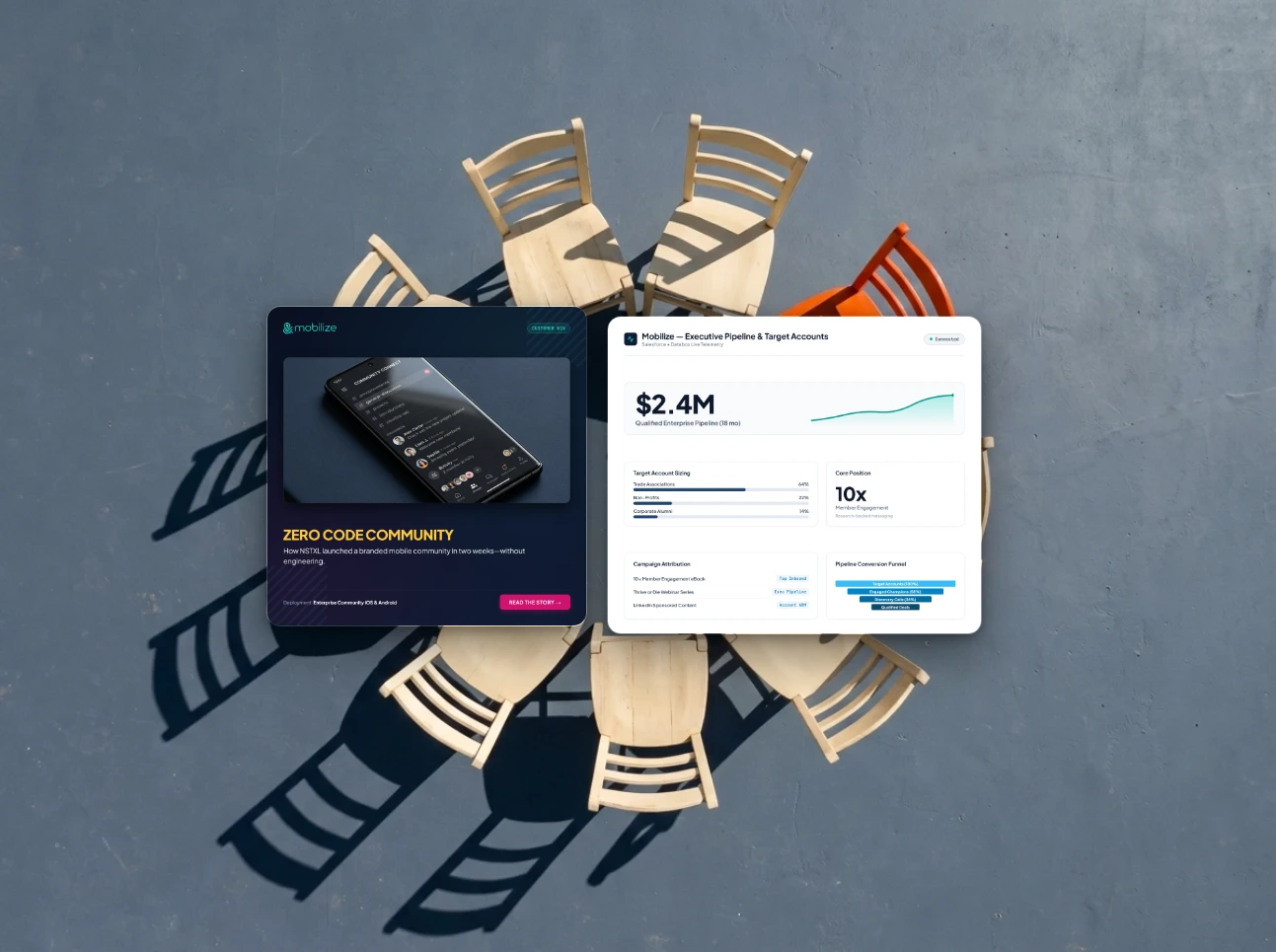
An ad built on a customer story: how NSTXL launched a branded mobile app in two weeks with zero code.

Promotion for the How Associations Will Thrive or Die webinar.

A second version of the webinar promotion.
What 18 months added up to
Over 18 months, the work produced $2.4M in qualified pipeline.
When Mobilize hired a CMO, leadership kept us on for the final six months to hand the system over and keep it running. Forj later acquired Mobilize.